Building VLA Datasets: Images, Language & Actions
Vision-Language-Action (VLA) models are transforming robotics by enabling machines to understand visual environments, interpret human instructions, and perform physical actions.

Vision-Language-Action (VLA) models are transforming robotics by enabling machines to understand visual environments, interpret human instructions, and perform physical actions.
Autonomous vehicles and Advanced Driver Assistance Systems (ADAS) rely on accurate visual data to understand their surroundings. Cameras capture roads,
Claude-like AI models rely on large and diverse training datasets to understand language, follow instructions, generate content, and solve complex
Retrieval-Augmented Generation (RAG) helps Large Language Models (LLMs) answer questions using external information. It retrieves relevant documents and provides them
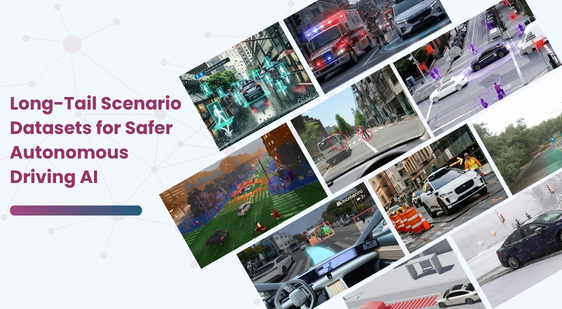
Autonomous driving systems must navigate busy roads, recognize obstacles, and respond to changing traffic conditions. However, everyday driving data does

Artificial intelligence is transforming how enterprises operate, make decisions, and serve customers. From intelligent automation to predictive analytics and generative
Autonomous systems need accurate environmental information to recognize objects, measure distances, and navigate safely. Cameras provide visual details, while LiDAR
Robots rely on training data to recognize objects, understand their surroundings, plan movements, and perform tasks safely. However, collecting and
Maps are becoming more than tools for finding locations. Today, artificial intelligence helps systems analyze satellite images, identify geographic patterns,
AI assistants need more than language knowledge to communicate effectively with people worldwide. They must understand different languages, regional expressions,