
Deepfake Detection Dataset
Deepfake Detection Dataset
Datasets
Deepfake Detection Dataset
File
Deepfake Detection Dataset
Use Case
Deepfake Detection, AI Security, Face Verification, Computer Vision
Description
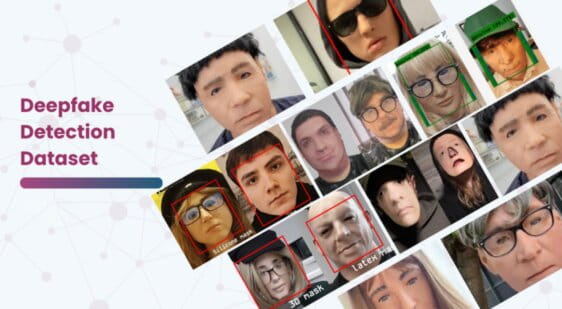
The Deepfake Detection Dataset 2026 includes 6,557 labeled face images for training and evaluating deepfake detection, face authenticity verification, and computer vision models.
Description:
The Deepfake Detection Dataset contains 6,557 labeled face images, including 2,790 authentic human faces and 3,767 AI-generated faces, designed for deepfake detection and computer vision applications. It provides a high-quality benchmark for training, validating, and evaluating AI models that distinguish real faces from synthetic images across various security and digital identity use cases.
Download Dataset
Artificial intelligence has revolutionized digital content creation, making AI-generated images more realistic than ever. While these advancements offer new opportunities, they also create challenges related to authenticity, misinformation, and digital trust. The Deepfake Detection Dataset is designed to support the development of reliable deepfake detection models by providing thousands of labeled real and AI-generated face images. It enables researchers, developers, and machine learning engineers to train, evaluate, and improve AI systems for detecting synthetic facial content across various computer vision and AI security applications.
Dataset Overview
The dataset includes a total of 6,557 face images, categorized into two primary classes:
- Real Images: 2,790 authentic human face images
- Fake Images: 3,767 AI-generated face images
Each image is labeled and organized to simplify the training and evaluation of deep learning models for face authenticity detection.
Key Features of the Deepfake Detection Dataset
The dataset contains a balanced mix of authentic and synthetic facial images, allowing models to learn distinguishing characteristics between genuine and generated content.
2. Binary Classification Labels
Each image is assigned a clear label:
- REAL
- FAKE
3. Detection Difficulty Levels
To support advanced model evaluation, samples may be categorized according to detection complexity:
- Easy
- Medium
- Hard
4. Ready-to-Use Data Splits
The dataset includes predefined partitions that simplify experimentation:
- Training Set: 70%
- Testing Set: 20%
- Validation Set: 10%
5. Metadata Support
Supplementary metadata can include information such as:
- Image source
- Generation method
- Face attributes
Annotation Details
The Deepfake Detection Dataset 2026 is enriched with structured annotations that improve its usefulness for machine learning and research applications.
Potential annotation attributes include:
- Authenticity labels
- Numeric class encoding
- Detection difficulty ratings
- Confidence measurements
- Source information
- Image generation metadata
Applications of the Deepfake Detection Dataset
Deepfake Detection Systems
Organizations can use this dataset to train AI models capable of identifying manipulated or synthetic facial images.
Digital Identity Verification
Identity verification platforms can leverage deepfake detection technology to enhance fraud prevention and user authentication processes.
Social Media Content Moderation
The dataset can help build automated systems that detect AI-generated images shared across digital platforms.
Cybersecurity Solutions
Security teams can develop tools that identify potentially malicious synthetic content used in phishing, impersonation, or misinformation campaigns.
Challenges in Deepfake Detection
As generative AI technologies continue to evolve, detecting synthetic images becomes increasingly difficult.
Some common challenges include:
Rapid Evolution of AI Models
New image generation techniques emerge frequently, requiring continuous updates to detection systems.
Generalization Issues
Models trained on one type of synthetic image may struggle when encountering images generated by different AI architectures.
Data Diversity Requirements
Effective deepfake detection systems require exposure to diverse demographics, image qualities, and generation techniques.
High Visual Realism
Modern generative models produce highly realistic facial images that can closely resemble authentic photographs.
Conclusion
This dataset is sourced from Kaggle.
Contact Us
FAQ
Question 1. What is the Deepfake Detection Dataset used for?
The dataset is used for training and evaluating AI models for deepfake detection, face authenticity verification, image classification, media forensics, and AI security applications.
Question 2. How many images are included in the dataset?
The dataset contains 6,557 labeled face images, including 2,790 authentic human faces and 3,767 AI-generated faces.
Question 3. What type of annotations does the dataset provide?
The dataset includes binary classification labels (REAL and FAKE) and is structured for machine learning and deep learning workflows.
Question 4. Can this dataset be used for deep learning projects?
Yes. The dataset is compatible with TensorFlow, PyTorch, Keras, OpenCV, CNNs, Vision Transformers (ViTs), and other modern deep learning frameworks.
Question 5. Which industries can benefit from this dataset?
The dataset is valuable for organizations working in AI security, cybersecurity, digital identity verification, media forensics, social media moderation, computer vision research, and academic education.

Quality Data Creation

Guaranteed TAT

ISO 9001:2015, ISO/IEC 27001:2013 Certified

HIPAA Compliance

GDPR Compliance

Compliance and Security
Let's Discuss your Data collection Requirement With Us
To get a detailed estimation of requirements please reach us.