
About Dataset
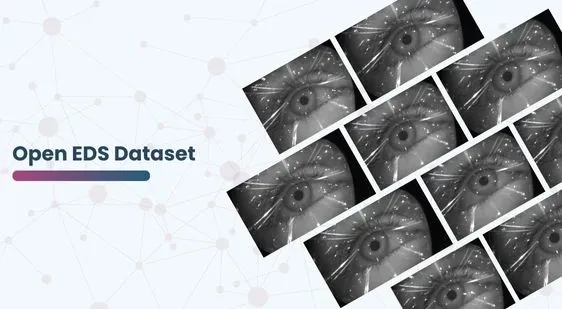
Introducing OpenEDS (Open Eye Dataset), a large-scale collection of eye images captured using a virtual reality (VR) headset equipped with two synchronized cameras facing the eyes.
- Dataset Details:
- Captured at a frame rate of 200 Hz under controlled lighting conditions.
- Compiled from video recordings of the eye region from 152 individuals.
- Divided into four subsets:
- 12,759 images with detailed annotations for key eye regions: iris, pupil, and sclera.
- 252,690 unlabeled eye images.
- 91,200 frames extracted from randomly selected video sequences lasting 1.5 seconds each.
- 143 pairs of left and right point cloud data generated from corneal topography of eye regions, collected from 143 out of 152 participants.
- Purpose:
- Designed to support research and development in eye-related technologies, such as iris recognition and pupil detection.
- Provides a diverse range of eye images for training and testing machine learning algorithms and computer vision systems.
OpenEDS is a valuable resource for advancing understanding and innovation in eye-related technologies.
Conclusion
By leveraging this dataset, stakeholders can develop innovative solutions, optimize resource use, and make informed decisions that benefit AI research and computer vision applications. As we continue to improve data collection and integration methods, the impact of the Open EDS Dataset will only grow, driving advancements in AI and vision-based technologies.
This dataset supports the development of advanced computer vision models for eye tracking, iris recognition, and pupil detection. Its large-scale and well-annotated data make it highly valuable for real-world vision-based applications.
This dataset is sourced from Kaggle.

Quality Data Creation

Guaranteed TAT

ISO 9001:2015, ISO/IEC 27001:2013 Certified

HIPAA Compliance

GDPR Compliance
